|
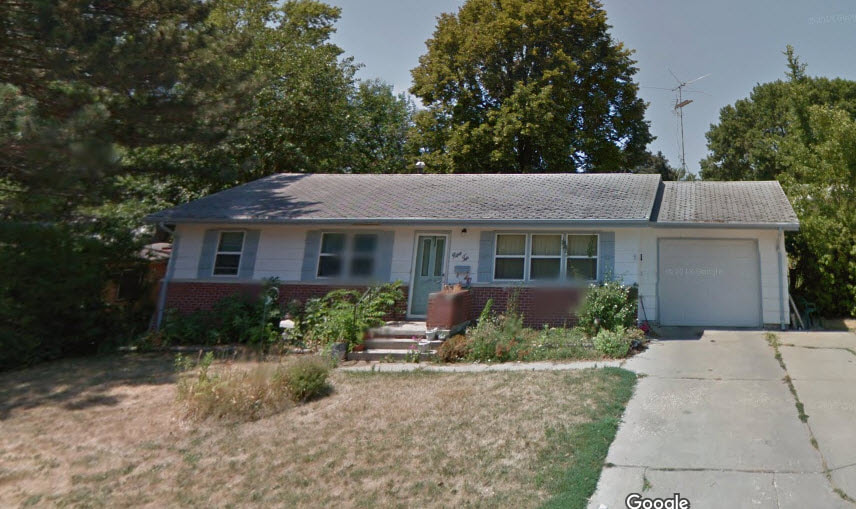
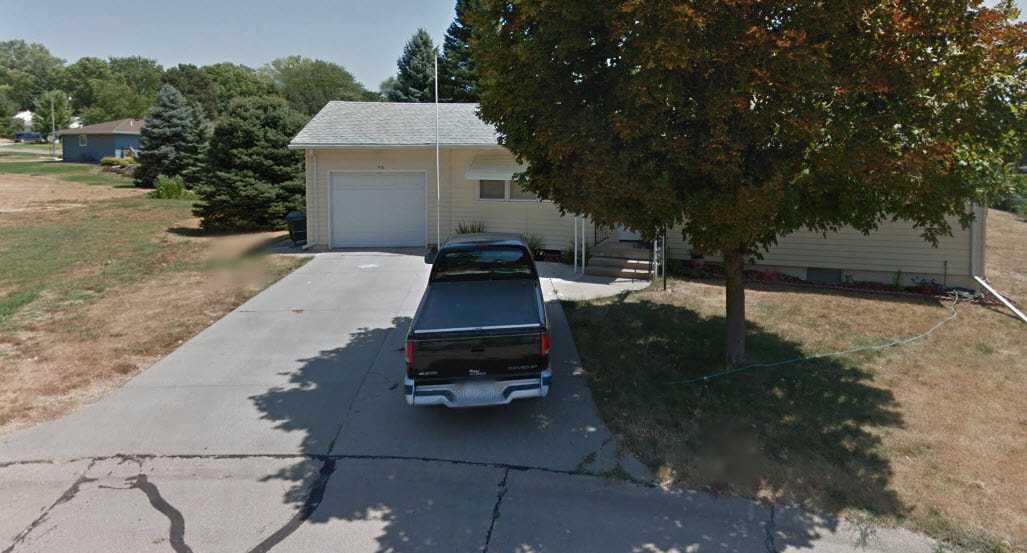
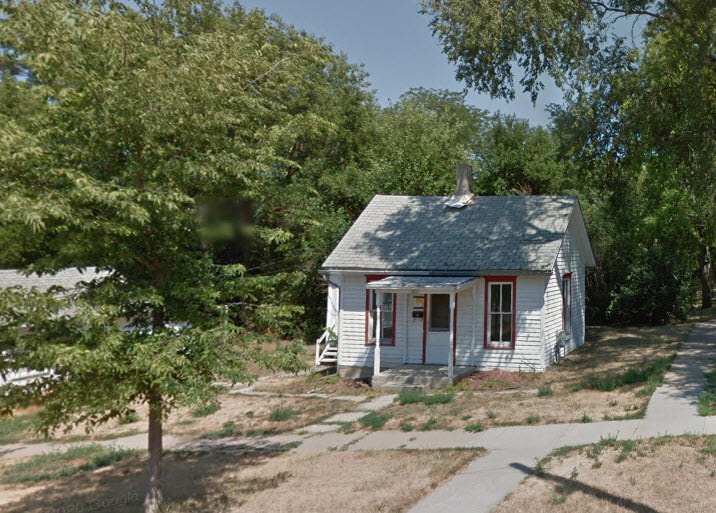
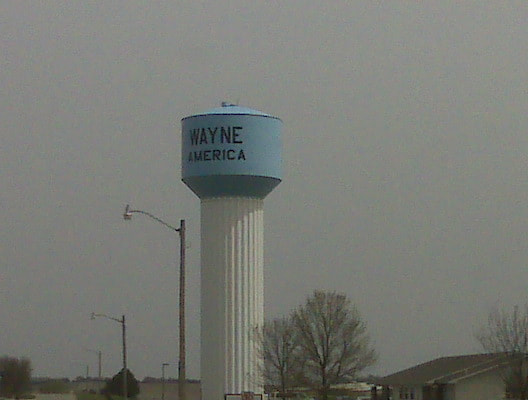
So I started a Substack—newsletter, blog, whatever it is. I’ll continue to post some things here (though, obviously, I haven’t recently—I haven’t had anything to say). Here’s the most recent Substack….  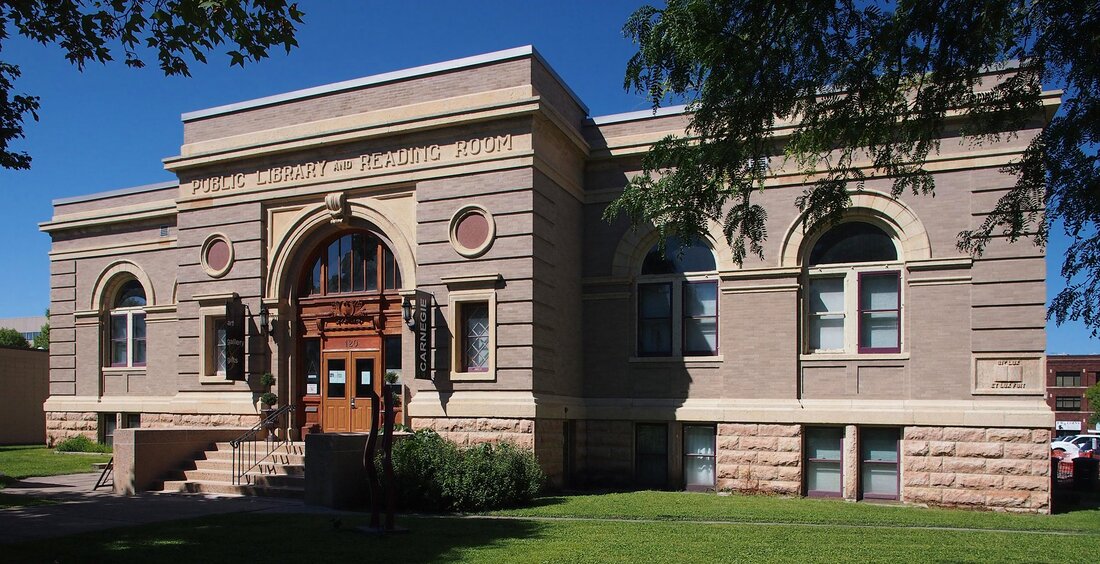 This is the old Carnegie Library in Mankato, Minnesota, where I spent much of my youth. The children’s collection was over on the right-hand side of the building in this photo, and the newspapers and periodicals were on the left. The Blue Earth County History Collection was down in the basement along with some newspaper archives. The children’s side had a nice display of the Maud Hart Lovelace Betsy/Tacy/Tibb books. I read some of those books in third grade or so, and the children’s room had a big map of Mankato (“Deep Valley” in the books) in the Betsy/Tacy world and I thought that was pretty cool, and time I the spent trying to figure out the relationship of Mankato past and present is something I still do whatever place I happen to be at whatever time I’m in. I didn’t much care for children’s books, though. The only one I actually remember was about a kid who built a soap box derby car (does the soap box derby even exist anymore?) and took it to Toledo for the big race and won against all odds, ho-hum. I moved to adult books and history at a pretty young age. It seemed like children’s books were written to offer lessons or inspire and I didn’t like lessons and I was not inspired. Now, adult books—the things that happened in those books were inspirational! Drinking whiskey and driving in cars and blowing things up and doing sex (though that remained kind of mysterious). These were positive life goals—even for a fourth grader! The big gift of the library—of books in general, and of my mother, who introduced me to reading and encouraged me to read—was its ability to take an often-unhappy kid anywhere. Everywhere. There was definitely an escape aspect to reading. I could get out of Mankato, or West Virginia, or wherever I happened to be, and be someplace—better. But reading also offered a window into the complicated and mysterious world I’d somehow found myself in. I guess reading offered an—education? A way of understanding my situation, and a context for what I saw around me. A way to cope. Go read something. 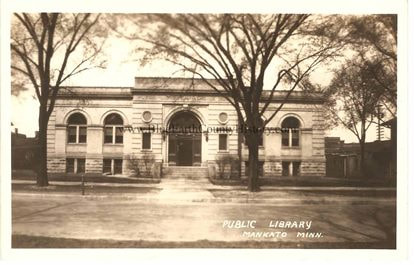 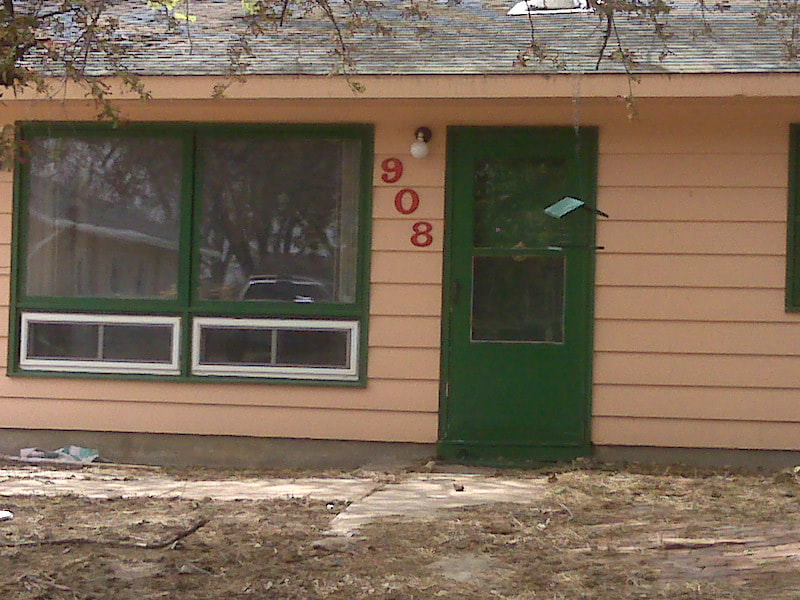 This is 908 Circle Drive in Wayne, Nebraska. I lived here for about a year and a half—1964, 1965—while my dad taught at Wayne State College. 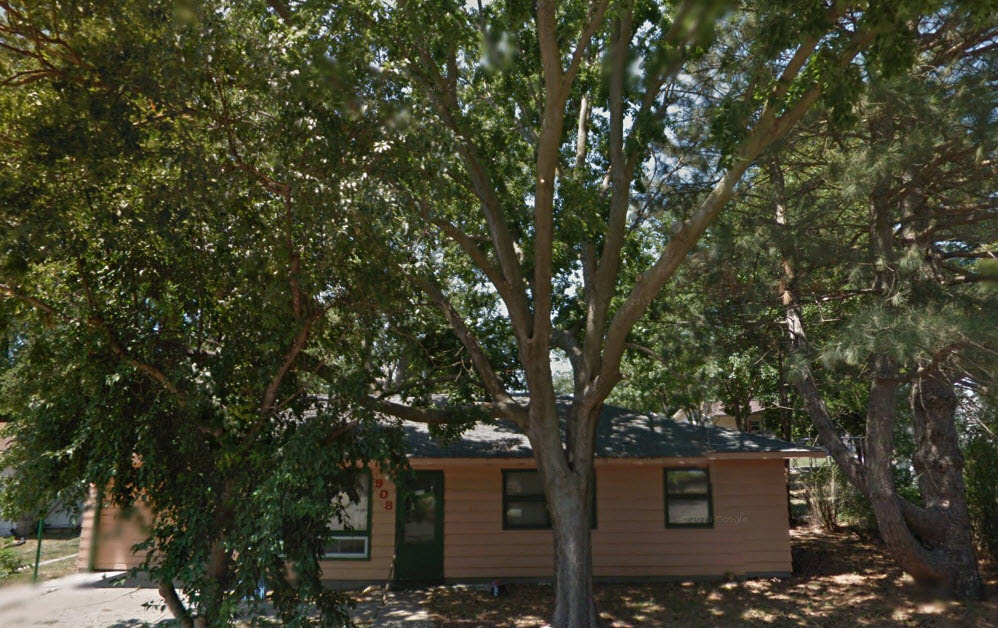 A lifetime later, in 2010, I visited Wayne on a job interview, and of course had to drive by the old homestead. Aren’t childhood houses supposed to be smaller when you see them as an adult? This place seemed—bigger. I think someone at sometime added a room or two onto the back...? Those trees didn’t exist in 1965! (That curved-trunk tree might have). But there still wasn’t much grass…My bedroom was at that window on the far right. In 2010 the house was for rent at that time—I thought, If I get the job, would it be weird to live here…? A voice answered—Yes, Lowell, it would be very fucking weird. (I did not get the job. Which is a good thing! (No offense, Wayne State)). This house below—the house next door—didn’t exist in 1965—it was a vacant lot
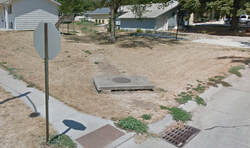 When I tell an imaginary kid to go out and play in the ditch, I’m not being mean. This is what we kids did in Wayne! We played in the goddamn ditches! It was fun! Look at this ditch above! Doesn’t seem like much—I think it’s been filled in. But 55 (!) years ago it was pretty deep—about head-high on a first grader. We could play army in the ditches, hide from the pedos, if girls were around we’d play Family (I always got delegated to be Brother, which was uninspiring). The ditches led to culverts that ran under the streets, and those were cool and scary, too—you could hear cars thumping overhead…. I’ve only written one story set in Wayne. It’s about playing in the ditches and storm sewers and hiding from the pedos…and it sadly doesn’t work. POV problems. Maybe I should figure out a way to fix it….
You know my entire oeuvre makes a great present, right? So get over to my Amazon page and order some books. Your life will be better for it! The kindle editions are at a special pandemic/holiday price! Not sure which book to get? That's understandable--it's easy to be confused by an abundance of excellence. So here's a seasonal reminder: THAT DEMON LIFE is the official community read of Pottersville!   This is the grave of Laura Zeilke, who was my teacher in the third grade at Wilson Campus School in Mankato, Minnesota. I woke up the other day with a sudden unexpected flashback to my third grade experience, and to Miss Zeilke, and so I did some semi-random googling, and found that she had passed away some time ago…. My educator parents thought Miss Zeilke was a good teacher. They knew more about teaching than I did or do, but as far as I could tell as a kid in the classroom—No. Miss Zeilke was mean, Miss Zeilke was crabby, Miss Zeilke picked on me, Miss Zeilke was generally disliked by me and (I think) my classmates. I remember once at the mall (what passed for a mall in 1966) jumping on the cracks between the concrete in the sidewalk outside—yelling “Step on the crack, break Miss Zeilke’s back!” and my poor mother was shocked and outraged. But it was an honest childish emotion I was expressing. Below is a floor plan for a room at Weiking Center at Minnesota State University-Mankato. Back in the day this was Wilson Campus School, at Mankato State College, where I received much of my youthful education. Wilson was a small school—maybe 500 kids pre-k through 12th Grade. From the website, it looks like the building has been much modified over the years, but this—which was the Second Grade classroom then—still has much the same form as the other classrooms in the elementary school wing of the building. 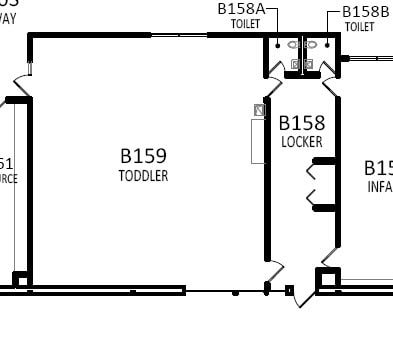 Of interest here is B158—the “locker.” In my day this was just called the “back room.” A storage area. Every classroom had one. I remember all the back rooms had those giant paper cutters which we were constantly warned away from. I guess other teaching supplies were stored there, too. But as far as I could tell then, or remember now, the main use for the back rooms was to house and punish unruly students. I spent a fair amount of time in the second grade back room. I probably spent half the year in the third grade back room. Sheesh. I was an ornery kid. No doubt about it! I was squirmy and fidgety and excitable and I talked a lot. (I probably had ADHD, which was unknown then). But I think different adults reacted differently to my orneriness and squirminess. Me, as an adult? I sure wouldn’t want to be around me as a child. If Current Me was supervising 3rd Grade Me, I’d say something like, “Little Lowell, go out and play in the goddamn ditch and leave me the fuck alone.” Or I’d lock me in the goddamn back room with the giant paper-cutter and hope for the best. Some of my teachers no doubt found me annoying, too—maybe especially Miss Zeilke found me annoying. At one point in the school year, Miss Zeilke moved my desk from the rear of the room, to the front—right in front of her teacher desk. I told my parents that, yeah—she moved my desk to the front of the room because I was smarter than everyone else. And, yeah—I think I actually thought that was true! I don’t think I was lying! Stupid, clueless me. My parents came home from a meeting with Miss Zeilke and told me that—Hell, no, Miss Zeilke didn’t move my desk because I was smart, she moved my desk because I was ornery and obnoxious and disrupting the class. Whoa. My parents were ashamed and they were pissed. So the unhappy school year sort of passed like that. I got yelled at, I got exiled to the back room, I endured what I thought at the time was terrible injustice. I guess I learned stuff. Our class moved on to the Fourth Grade, with Mrs. Palmer, who I loved. Miss Zeilke later retired and moved to Florida. But I never forgot Miss Zeilke! In fact, I carried a stupid smoldering grudge. So. Years and years later, my class at Wilson finally graduated and people were milling around afterward, and I saw—Miss Zeilke. Talking to one of the Mitchell twins. Laughing—saying something about how cute they were way back then. I marched over and stuck my arm out. “Look!” I said. “I still have scars on my arm from when you grabbed me and dragged me off to the back room!” Miss Zeilke just looked at me blankly. Confused. Miss Zeilke had no idea who I was. And I suddenly felt like an idiot. Here I had been carrying a deep anger and resentment toward her for nine years—for half my life!—and she had been off living her good life in retirement with no idea that I even fucking existed. So my hate was all a big nothing. So, apparently, was my life. You know my entire oeuvre makes a great present, right? So get over to my Amazon page and order some books. Your life will be better for it! The kindle editions are at a special pandemic/holiday price! Not sure which book to get? That's understandable--it's easy to be confused by an abundance of excellence. So here's a seasonal reminder: THAT DEMON LIFE is the official community read of Pottersville! 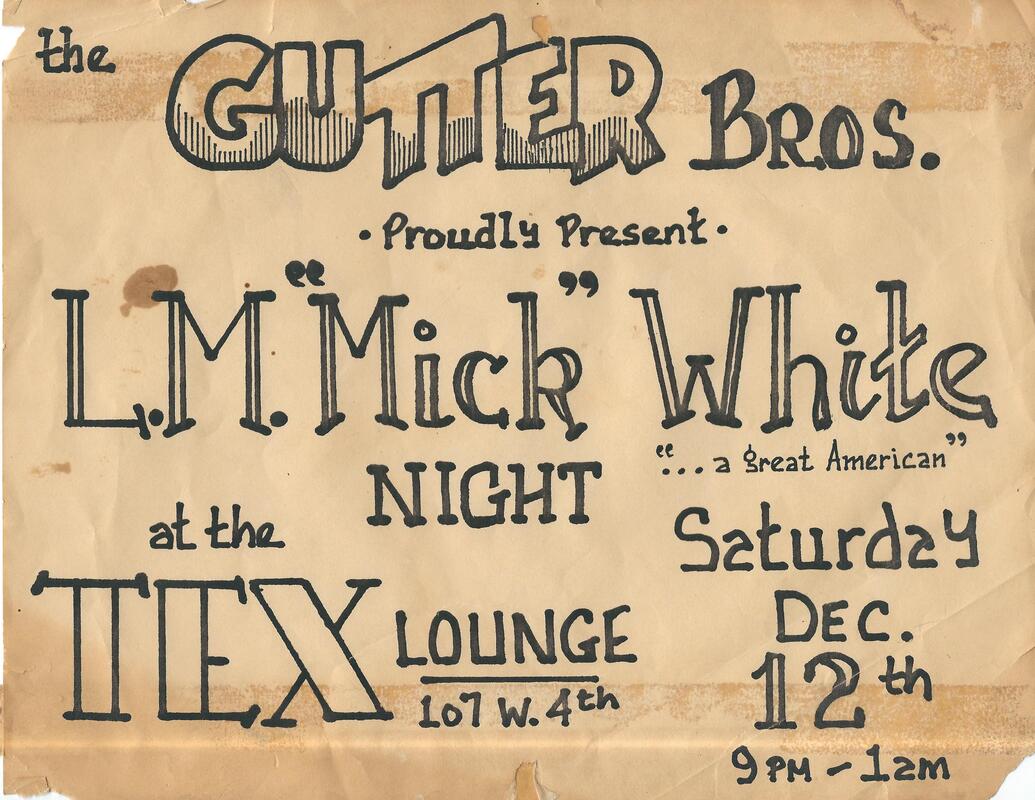 Where to start? Let’s start with setting. It was December, 1981. I was living in the Haunted House on Pruett. The Tex Lounge—not to be confused with the Austex Lounge, on South Congress—was a sleazy beer joint on 4th Street, just west of Congress. The photo below is the best I could find—the bar's entrance was just to the right of the awning on the far right side. 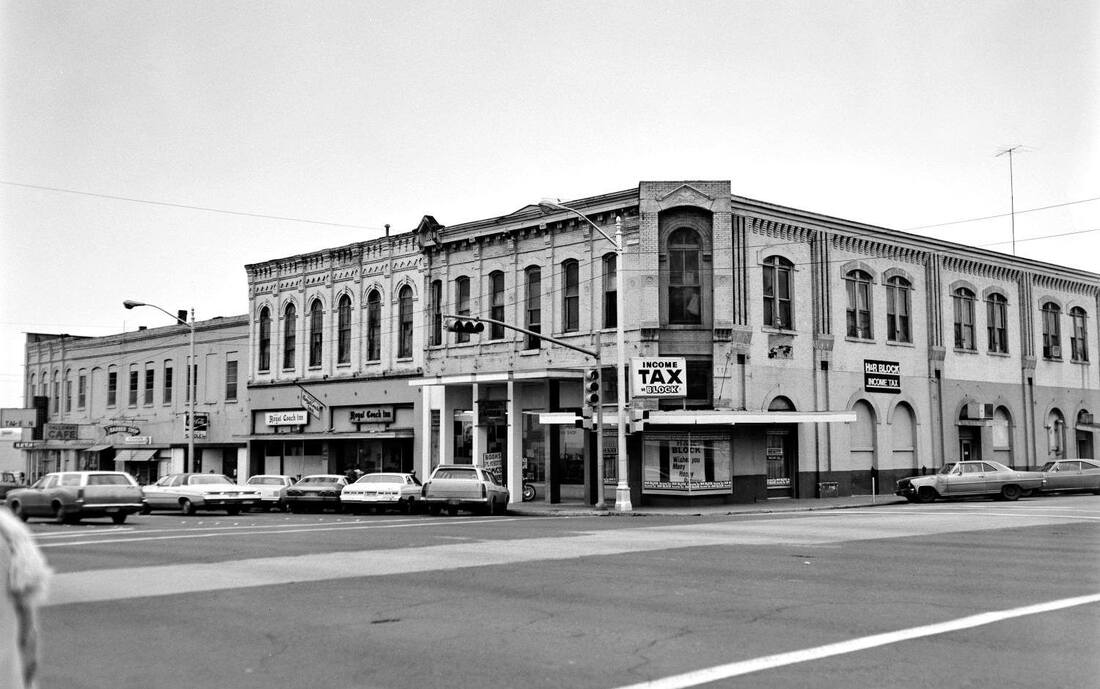 The Tex Lounge was sleazy and nasty, but a step up from the super-nasty (yet interesting) rumdum bars I wrote about here. The bar itself was kind of small, but there was a big room on the east side with a couple of pinball machines—one of them a KISS machine that I could roll all the time. There was a barmaid from Minnesota named Gail, who was lovely, and we actually knew a person in common back in the north. I would go down to the Tex in the afternoons and play pinball and flirt with Gail and work on being a colorful character in a sleazy bar. Every now and then the Tex Lounge would book a band in the big room--Kathy and the Kilowatts was a big draw, and the Gutter Brothers. My connection to the Gutter Brothers was through Peter Nye, the band’s bass player, who was also a bartender at the Deep Eddy, and also a neighbor at the 700 Club. One Sunday night we were hanging around the Eddy watching TV and when the bar closed, barmaid KB sent us on home. We walked up the hill to the 700 Club, and as we crossed 7th Street three or so cop cars screeched up and swarmed around us. Not city cops—UT cops. They got out of their cars and one of them grabbed me by the arm. “There’s been reports of prowlers around the married student housing,” one of the cops said. “You don’t match the description,” he said to Peter. “But YOU do,” he said to me. “Oh,” Peter said. “Well, I’ll see you later.” He crossed the street and went up the steps and into his apartment. Ha. I wasn’t too worried—it was like a big joke. I had an ironclad alibi—down at the bar all evening being a ne'er do well. I got to sit in the cop car until someone came by and looked me over and said I wasn’t the prowler and then they cut me loose and I went on up to my apartment. Peter later bought me a beer and apologized for bailing. The Gutter Brothers’ biggest song was a punk number called “Killer Waitresses.” It was sort of inappropriate in 1980, and certainly inappropriate in 2021. Killer Waitresses Yes. Well. It was fun at the time. They also had a great t-shirt, which you can see me wearing here. 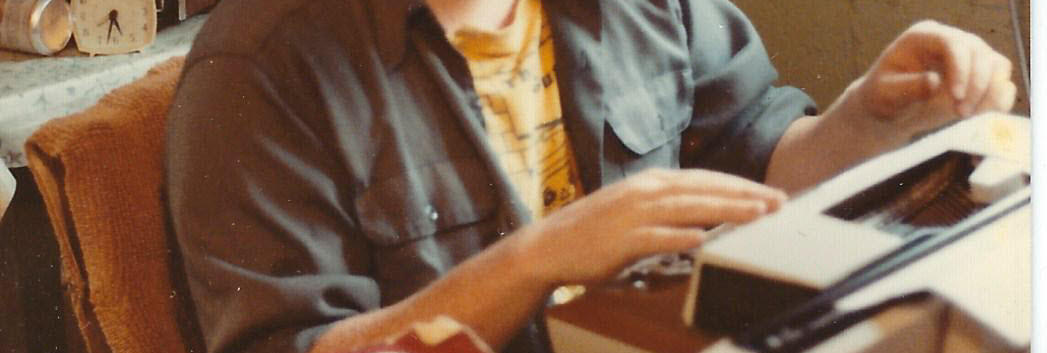 The shirt is long gone now. When it existed, it showed Raggedy Ann and Raggedy Andy—fucking!—in the gutter. (Artwork by Peter Nye...). I guess that was inappropriate, too. But amusing! So, I don’t know, we were all at the Deep Eddy one evening, and I was ranting about something. Probably complaining that someone (my professors?) didn’t recognize my greatness or whatever. “Well, you’re a great American,” Peter said. “Yes!” I yelled. “I am a great American!” And so it was on. The Gutters had a gig coming up at the Tex Lounge, and Peter set it up as a tribute to me. The night itself was fun. Many people came—I didn’t do a count, so I don’t know exactly how many. Mostly people I knew, but also people who came in off the street because it was Saturday night in a sleazy bar in Austin. Much beer was drunk. At one point the band invited me to read a poem—and this was my first public performance. I kind of sucked. I’m the weird kind of introvert that wants people to pay attention to them, until people are paying attention to them, and then they get anxious. (Also I mentioned much beer, right?). I started to read a poem. I’d never used a microphone. People had trouble hearing me. Peter Nye came over an adjusted the mic a couple of times. Maybe it was better. I continued reading—a punk poem I’d written a couple of years before in Minneapolis after hearing the Sex Pistols record for the first time. My mommy was a sterno bum It was an authentically terrible performance. Someone even threw a beer can at me! Sadly empty. Oh well. I think I’ve gotten better since then. But! Despite the poetry, it was a great night! A big sporting evening, as they say. And when the show was over, I was grabbed by some characters and we drove down to the coast to watch the sun rise. Youth is exhausting.  You might be interested in my novel of Austin, That Demon Life....a novel of lust and laziness....
“That Demon Life has got Austin in its sway, or at least this novel's motley crew of characters. A horny judge, a defense attorney with an attitude, an entourage of petty criminals, a dating service maven, a self made internet porn star and a boy toy or two—they're all slouching toward Sixth Street and beyond. This is a fast-paced, hold-on-to-your-bar stool satire, a hilarious, stumbling romp through law and disorder, urban ennui and its after-hour antidotes, Texas-sized lust and doom.” —Alison Moore, author of The Middle of Elsewhere and Synonym for Love. Read That Demon Life now! 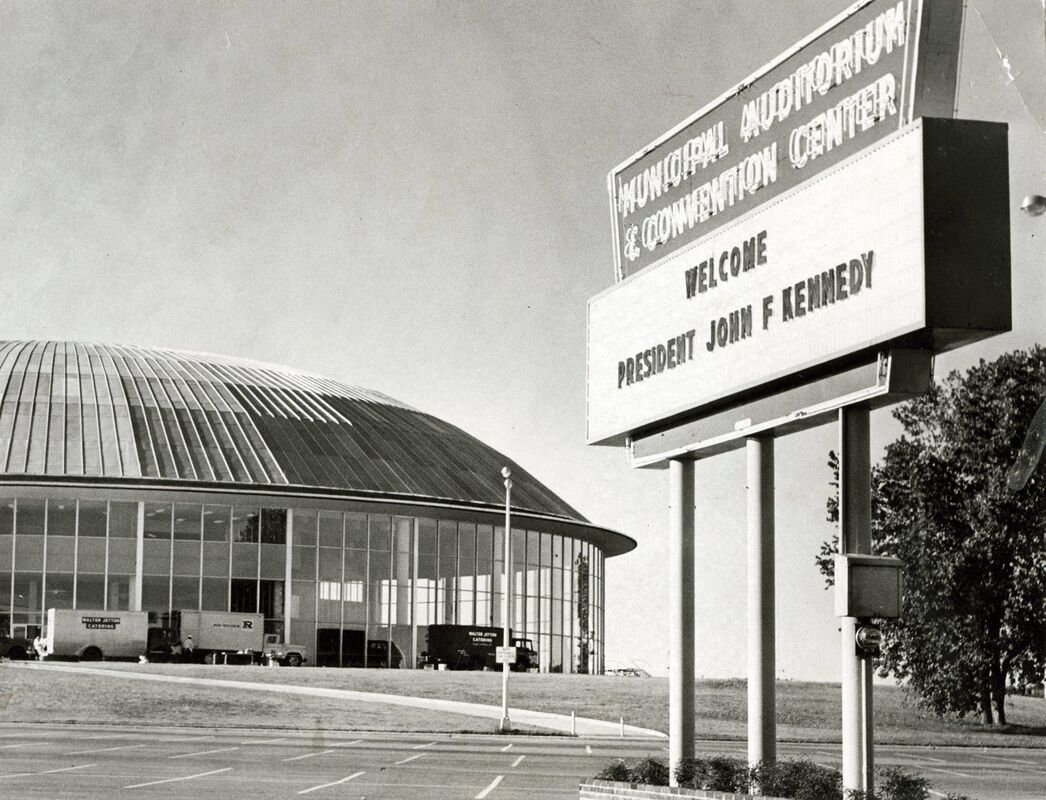 He didn't make it to Austin that day.... (This is a continuation, sort of, of my kindergarten post here). And so one day in kindergarten we were building something with the new blocks and the teacher came into the room and said “Children, the president is dead.” And I still remember how my stomach just--dropped—and I was left kind of confused. Like—what does that mean? And I was scared—I think now the fear was based more on the dark tone of the teacher’s voice, rather than any childish anxiety about the fate of the nation. My mom, as usual, came and took me home. The weather across West Virginia was cold and gray and damp that day. (That’s not a memory—I looked it up). Don’t remember if we talked about anything in the car. My parents were definitely not JFK fans—my mom told me years later how, following the 1960 election, she was sick to her stomach every time she saw JFK’s face. (I later came to understand this—after the 2000 election, I had a similar reaction to George W. Bush). When I got home there was big big difference—no cartoons! TV stations in those days telecast cartoons for the after-school set. Looney Toons was my favorite, especially Bugs Bunny, but I liked Woody Woodpecker, too. But with JFK dead, there were just a bunch of solemn old people on TV talking. Man, that was terrible. My dad came home cussing. That was actually kind of normal, but the cussing this time was about Kennedy. He’d been up in Pittsburgh for the day with some other grad students and they were driving back to Morgantown when they heard the news. My dad’s immediate response was, “Ah, the son of a bitch deserved it.” The other grad students—objected. I guess it got kind of heated. Anyway, he got home pissed and we all sat in front of the TV for the next four or so days while my dad kept up a rude commentary. I remember at one point him saying, “They’re all acting like they expect him to jump up out of the coffin any minute!” I sat up at that—Whoa, JFK jumping up out of the coffin would have been cool! I thought it was also cool how they wedged the boots in backwards on that horse. And Haile Selassie sure had a bunch of medals. (“Ah, he gives himself a goddamn medal every time he builds a bridge,” my dad said). So! Fifteen years or so later and I ended up in Austin, Texas, at a bar called Raul’s. Seeing a band called The Huns. And the squirrelly lead singer got behind the mic and yelled, “Fifteen years ago a president came to this state. And YOU killed him! And WE’RE glad he’s dead!” And--bang-bang-bang noise-noise-noise, etc…. I mean-- He said he'd get us to the moon That’s pretty funny! Punk rock, y’all. And, so, anyway, about a year after that, I was down at the Deep Eddy with a girl I liked named M, and I was telling her about seeing The Huns—and “Glad He’s Dead.” We were seated sort of toward the door end of the bar, me with my back to the door. I heard behind me someone say, “You’re an asshole.” What? I turned around and there was a squat older guy at the very end of the bar holding a mug of beer. He looked pissed. “John F. Kennedy was the greatest president of all time,” the guy said. “Oh, yeah?” I asked. “Well, my dad said the son of a bitch deserved it.” “Well, your dad’s an asshole, too.” “Malcolm X said the chickens came home to roost.” “And Malcolm X is an asshole, too.” But! Things did not escalate! Kind of surprising, right? M got the drunk guy chilled down, and the guy ended up telling M and myself his whole lugubrious stupid life story, which didn’t amount to much. Typical Silent Generation. Loved JFK. Worked hard. He’d gone to high school with Johnny Unitas. That was the high point of his life—“They’ll never be able to take that away from me.” He had Johnny Unitas—and those memories of JFK. 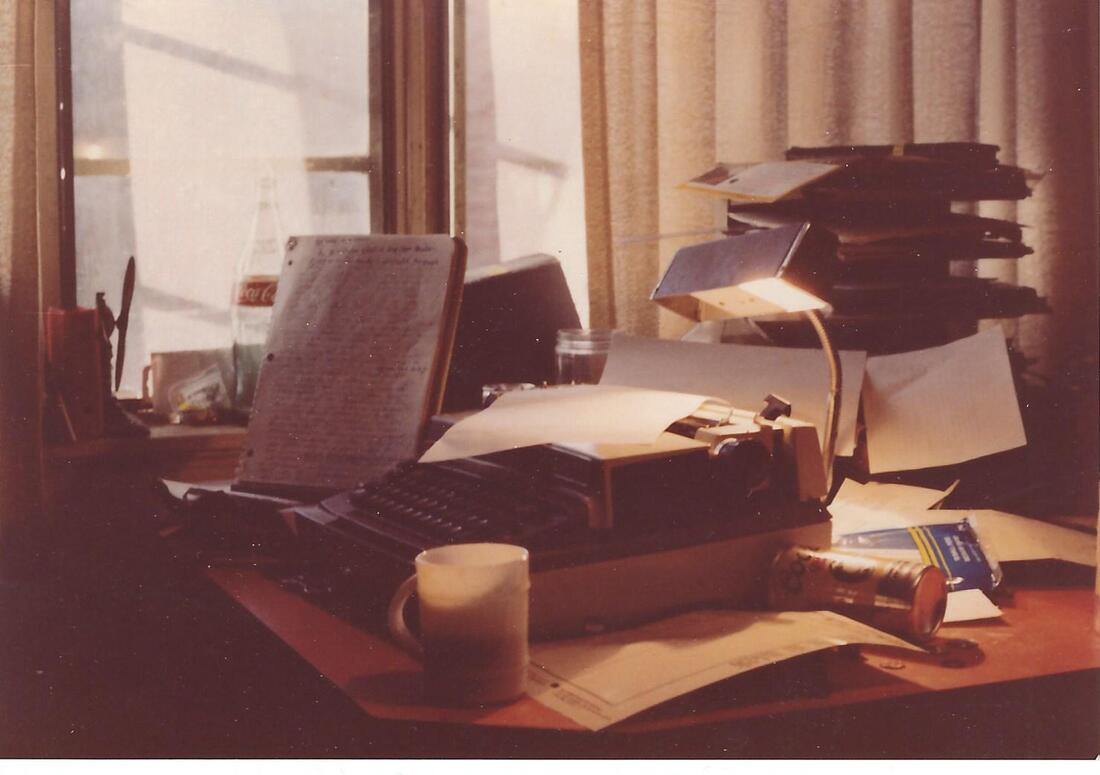 This is my desk in the Haunted House, 1982. It’s messy—just like my brain….
I wrote about this desk once before, c. 1981 (here). But it was earlier in my haunted residency, which I wrote about here. There’s more going on in this photo than the 1981 shot—there was more going on in my life, too. I think this photo was probably taken in the early morning, after me being up all night. Morning sunlight is coming from the east, and my lamp is still on. Only one bulb in my lamp! There’s an empty Coors can (why was I drinking Coors? I was young). A coffee cup with, probably, coffee in it. Empty Coke bottle in the background on the windowsill. Also on the windowsill is another coffee cup and a cool bookend with a propeller—now sadly lost. I wonder what happened to that. Don’t know what the red book is. The rectangular-ish thing on the windowsill is one of those expandable file folders. Who knows what I was sticking in it. Probably unpaid bills. There’s a jar back there I was probably using for a drinking glass. Also one of those stacking file things—I had several of those, mostly carried off from my dad’s office. I just crammed junk into them—unpaid bills, probably, like my dad. My trusty Smith-Corona is in the center. I was working on two projects then—a fly fishing book, and the rock’n’roll novel. I can’t make out what the notebook says—I’m thinking it’s probably the fly fishing book, now fortunately lost. In the foreground next to the typewriter is a typing guide for margins—you’d feed that heavy plastic sheet into the typewriter behind the paper you were typing on, and then you could see the margins through the paper. And there’s a mystery—I can’t figure out what the blue object is. The words are still fuzzy no matter how much I enlarge it. The fact that it doesn’t trigger a memory probably indicates that it’s something insignificant (or maybe traumatic?). I’m thinking it’s something mundane like a package of socks. (Contest! If anyone can make it the blue object, I’ll send you one of my books). 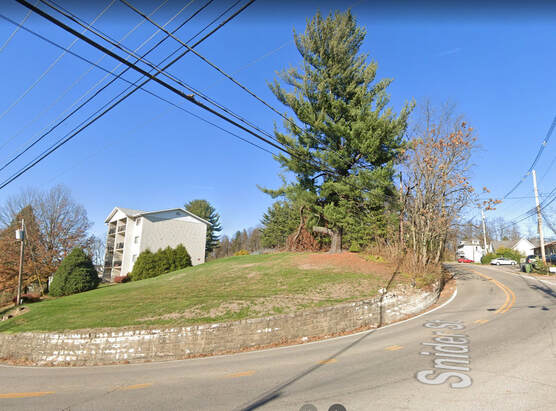 Once upon a time there was a little private kindergarten up on the top of this hill. This is the site where in 1963 I started school—and it was traumatic. We were living in Morgantown, West Virginia, where my dad was working on his PhD at West Virginia University. My mom was teaching seventh grade that year at the junior high. So on the first day she was going to drop me off at the kindergarten and then go on to teach her classes. The street here—where it curves up around the hill in the Google Streets photo—is US 119, and back in the day it was the main route between Morgantown and Pittsburgh. Seriously heavy traffic—big trucks, cars, everything careening around that big curve. Looks pretty small now, but it was busy then. Those now-brush-covered steps in the photo below led up to where the kindergarten was. 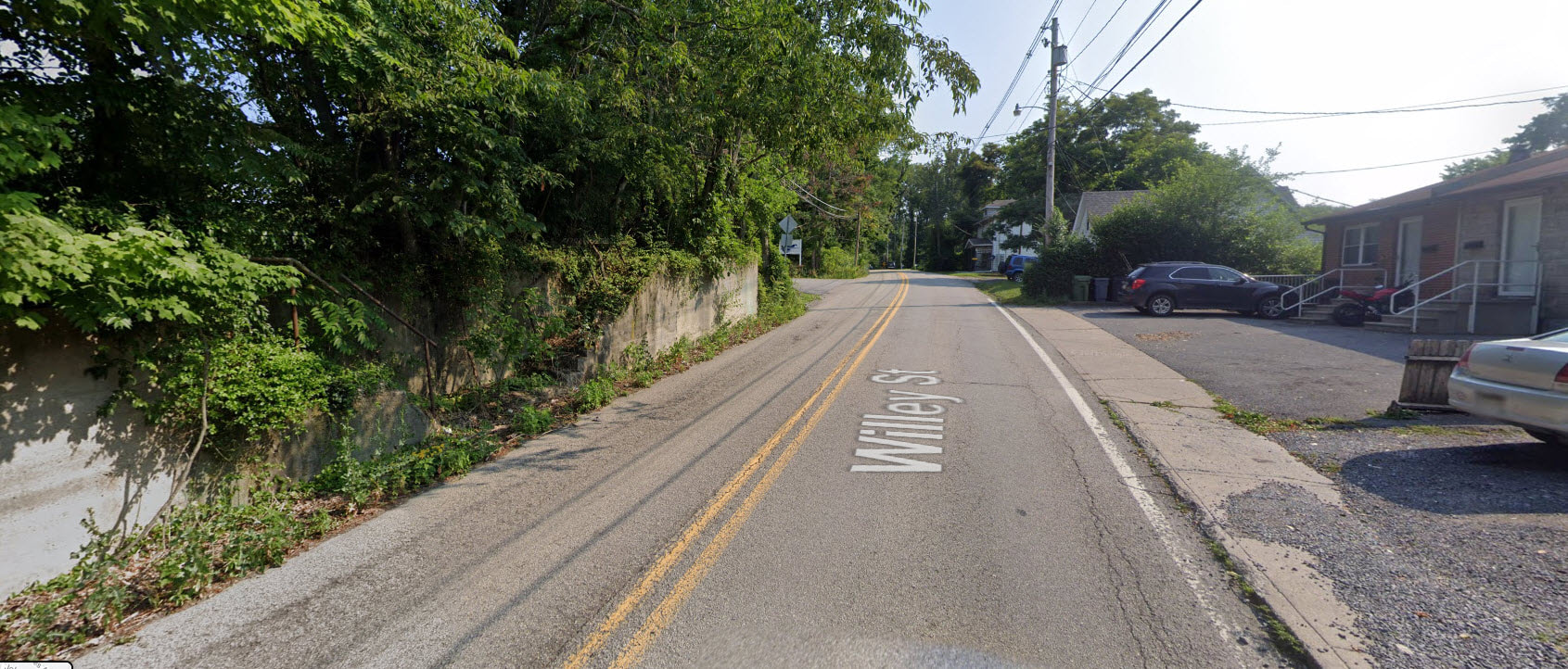 My mom parked across the street from the steps, heading north. (There is a driveway further up the road on the left, there—but since it was the first day, she might not have known about it). So we had to quickly cross the busy street to get to the steps. We had to dodge those cars. We had to—run. My mom was dressed nice—including shoes with heels. She took my hand and yanked me along and we took off running. And of course she didn’t go three or four steps before she lost her footing on the cracked West Virginia asphalt and fell and dragged me down, too, and I don’t remember if there was a giant truck barreling down on us but I imagine there probably was. She skinned the fuck out of her knee. Ripped her hose, of course, and blood everywhere. I got skinned up too but not as bad. We managed to hobble across the highway and up the steps to school. The kindergarten teacher—whose name I sadly can’t remember—helped clean and bandage my poor mom’s knee, and then my mom went off to teach, still shook up and hurting. That had to suck. I stayed at the school to do whatever it is they do in kindergarten. So my first day of education was—traumatic. I guess the school itself was traumatic in most modern 21st Century ways, too. The teacher lady was big on corporal punishment, and she kept a yardstick handy to smack any kid who got out of line. I don’t think I was so outraged at the basic violence of the yardstick—I was already used to getting yelled at/spanked/shook—as I was at the capricious and unjust way the violence was meted out. I think I once came across a Tolstoy quote where he says something like children are more sensitive to injustice than adults—and, yes, Lev Nikoleivich. Truth! One time. Still burns in my memory. It was nap time and we were all stretched out on our little cots sleeping or pretending to sleep, and this little boy on the cot across from me reached down and grabbed his shoe and threw it across the room. Boom! Then he collapsed and pretended to be asleep. Here came the teacher stomping in with her yardstick. And who did she wallop? She walloped me! Smacked me four or five times with the yardstick. I’m still mad about that—I didn’t do anything wrong! The teacher was harsh in other ways, too. One time a little boy put his foot on a chair while he was pulling on his shoe, and the teacher yelled, “Put your foot down! You look like a hillbilly!” Another time we were singing—trying to sing, right, it was a room full of little kids making noise while the teacher played the piano—and she stopped and yelled, “You sound like a bunch of Indians!” The food there was, I don’t know, slop of some sort, usually. I had a rep for being a finicky eater as a kid, but in truth the food put in front of me at school or at home was often not very good. At school we had juice breaks a couple of times a day, and the orange juice and apple juice were drinkable but often we got tomato juice—and, ugh. (Years later I hooked up with a woman and after we whatevered in the backyard she got us something to drink—tomato juice! I said, “Wow, this reminds me of kindergarten,” and she looked at me like I was a nut). I was usually the last kid to get picked up. I would wait by the window and look for our car to come around the bend. There was a little store down there in the bend and sometimes we’d go inside and get a fudgesicle. (The building is still there—now looks like a bar/restaurant of some sort. 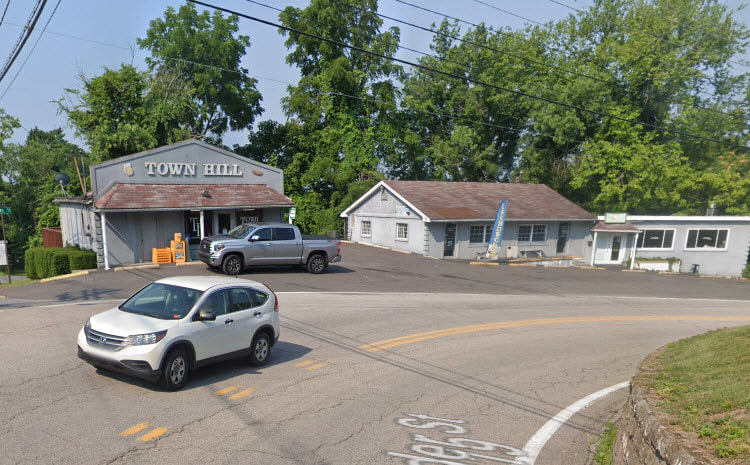 We were absolutely not allowed to play in the yard in front of the school. You can look at that top photo and see why—that’s a very steep hill dropping off to the busy highway. Dozens of little kids would have rolled down that hill and into traffic to get squashed. But there was a big open space in back and swings and a sliding board. One time, after my parents had taken me to the movie PT 109, I was at the top of the slide pretending I was JFK and I was shaking the slide as the Japanese destroyer whacked my boat in half and I tipped the whole slide over and I went tumbling into some rose bushes and got all scratched up. Ha! Nice! I was brave! The teacher made a fuss and dabbed stinging mercury-containing merthiolate on me. When my mom showed up she was all alarmed and she got on the phone and called my dad to tell him what had happened. I was so pissed! I wanted to surprise my dad with my wounds and show how tough I was. I refused to get in the car with her—I ran by myself across the busy road and all the way home. On cold days/rainy days we played inside. It was mostly gendered—the girls played with dolls and whatever. Boys played with these colorful cardboard boxes—blocks. We’d build forts and castles with the blocks. The blocks had seen much use—they were kind of tattered around the corners. Then the school then got a new set of blocks, and one day we were building something with the new blocks and the teacher came into the room and said “Children, the president is dead.” And I still remember how my stomach just--dropped—and that’s the beginning of a different story.  You might be interested in my West Virginia novel, Burnt House!
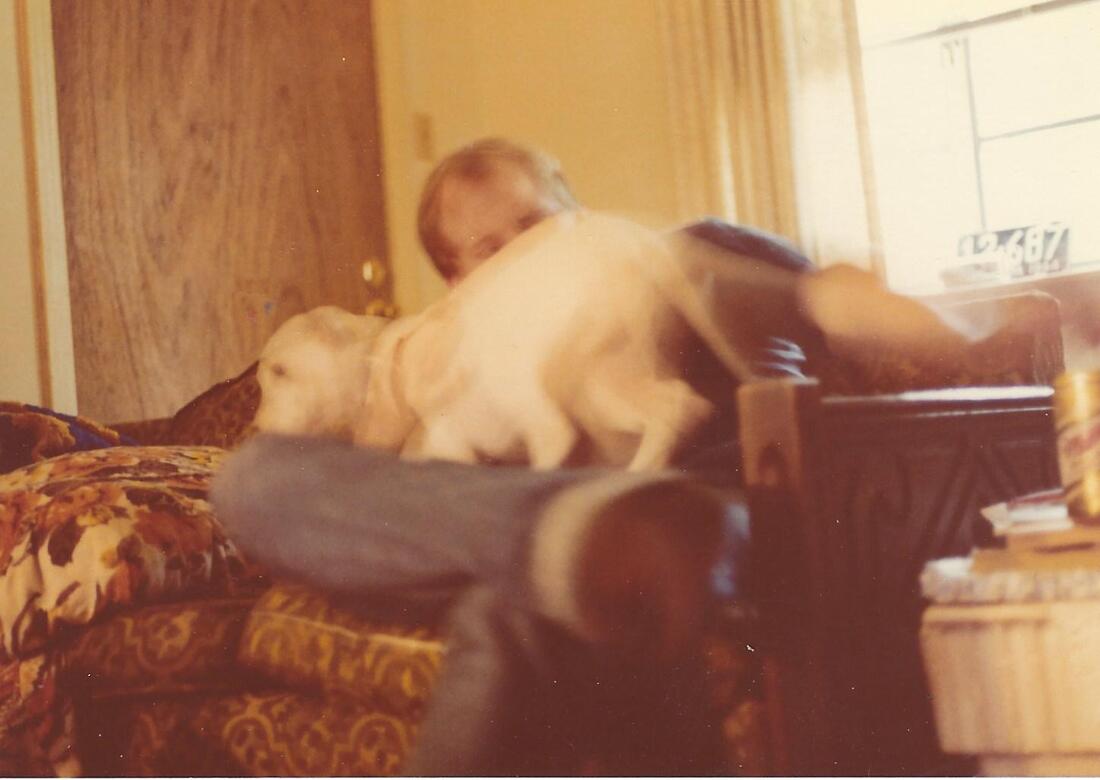
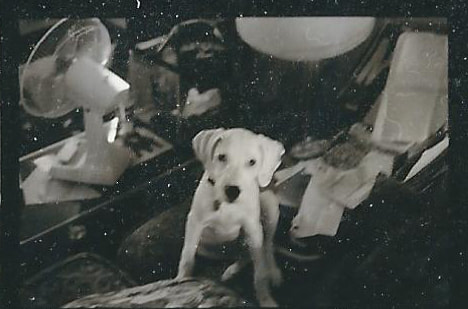
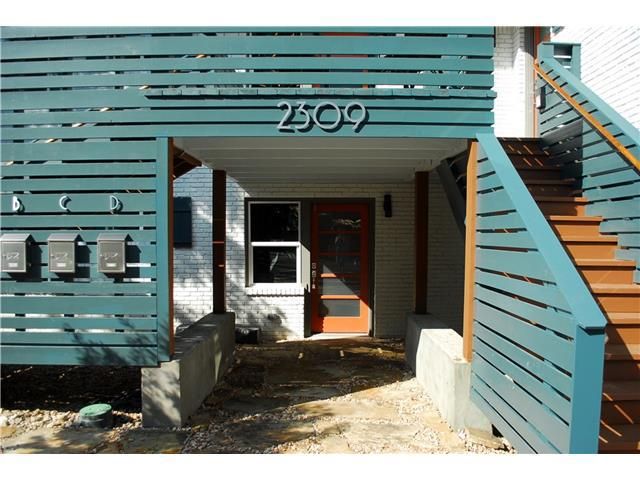
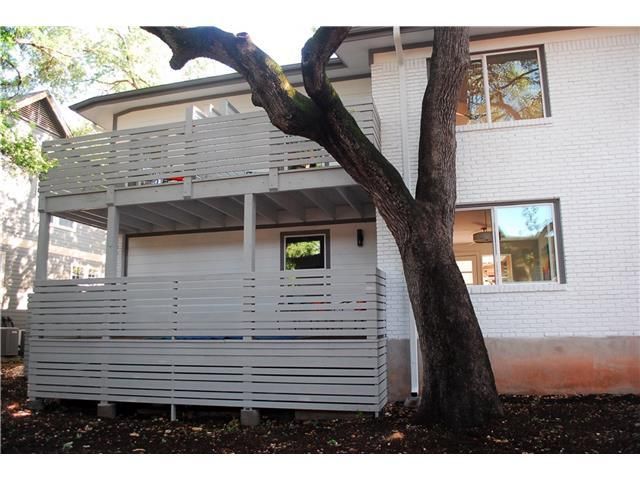
Burnt House is a darkly comic, gothic exploration of a West Virginia town and the people who live there. "Tragedies," one character reports. "Screw-ups. Cruelties. Bad, bad, sad things that nobody ever forgot, things people never talked about openly but only sometimes related in whispered hinting halfstories after dark." Read Burnt House now! 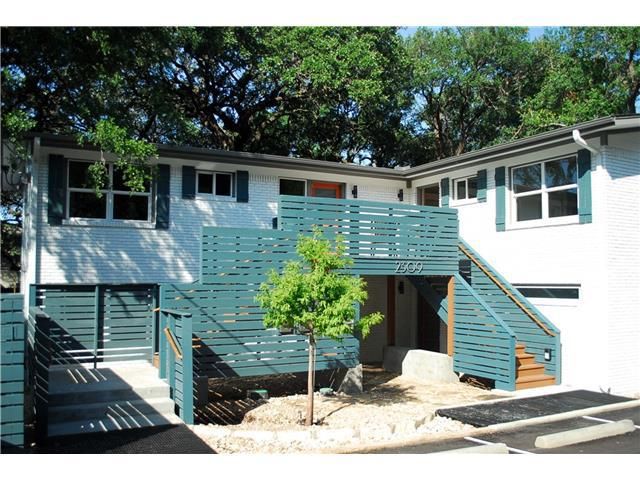 This is 2309 Pruett Street, where I lived from the summer of 1981 to the fall of 1982. It’s a fourplex. I had apartment 1-A, down on the lower left. I got this photo recently from Zillow—the fourplex certainly didn’t look like this back in the day—at all. I don’t have a vintage picture of the front of the house, but here is one of the back: 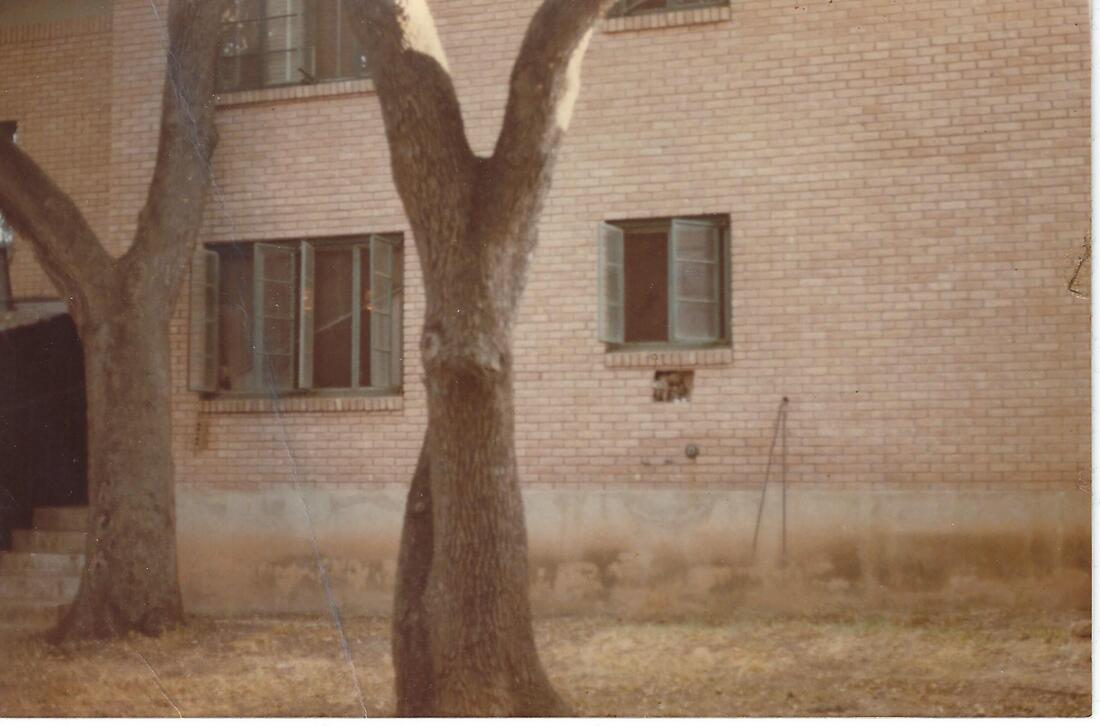 See those stripes? I went home for Christmas 1981 and while I was in West Virginia a pipe burst and the place flooded. In this picture you can see where water was seeping out through the walls and foundation. It was a mess by the time I got back! Mold, strange creatures…. This place was most notable not for flooding, or for a massive roach infestation, but for being haunted. Yeah! There was a ghost. I wrote about the ghost in a story, “Mexican Brick.” He first encountered the ghost—encountered, saw, felt, experienced something, whatever it was—one night when he jolted awake and saw his dog, a white mutt terrier named Soldier, dancing down the hallway toward the living room. Above the dog was a pale blue light, fist-sized and fuzzy in the darkness, bobbing just above the dog’s head, high enough that Soldier’s dancing leaps could not quite reach it. Soldier seemed frightened and excited at the same time, circling around backwards with his butt on the carpet, then jumping forward as high as he could and snapping at the air. Garza sat up and watched the blue light move down the hallway into the living room where it rose up toward the ceiling fan and slowly faded. Soldier crouched on the floor looking stupidly at the ceiling—at whatever had been there. And, because I have absolutely no shame when it comes to recycling my source material, in an outtake from my current work-in-progress: The Austin ghost I’d shared a house with was disquieting, at first. It was in an apartment in an older building, a four-plex, and I lived there for nine months, a school year. It wasn’t a spectacular haunting—I’d just start awake in the middle of the night and see—lights, balls of soft glow—and I’d watch them float down the hall from my bedroom to the living room and sort of dissipate. Four or five other times I started awake to find the vapory form of a woman sitting in the chair next to my bed, watching me. That sort of captures the basic phenomena—balls of light floating around. My beloved pup, Rugay, seeing the balls of light. A shadowy woman watching me sleep. It was a creepy place—it was always creepy. The haunted house was wedged in the courtyard ∟ of the 700 Club, which I wrote about here. I lived in a second-floor apartment overlooking the courtyard, and so had a good view of whatever went on at 2309 Pruett. For a while a crazy guy lived there who spent a lot of time screaming (about what we never knew) and then, early one morning, he ran out into the courtyard shooting a pistol and then he ran over and shut off the power for both buildings. He got taken away. Then there was a family who left their kids—toddlers—locked in the bedroom while they went off to work and we could hear those poor kids wailing all day and my neighbor called child protective services on them and then the kids were taken away and after a while the parents moved out too. After that this apartment, with its history of creepiness, was vacant. Rent was $20 a month less than the 700 Club, and so I happily moved next door. And the ghost was there—right from the start. As I said above—balls of light. Shadowy woman. An overall feeling of weirdness. Am I engaging in my own weirdness to say I really liked this apartment? Because I really liked this apartment! It was a good time in my life. The ghost just added to the edge! I was working a series of stupid jobs (see here and here). I was trying to write a novel for the first time. I was seeing lots of bands. I was having fun being young. Here are some more photos:
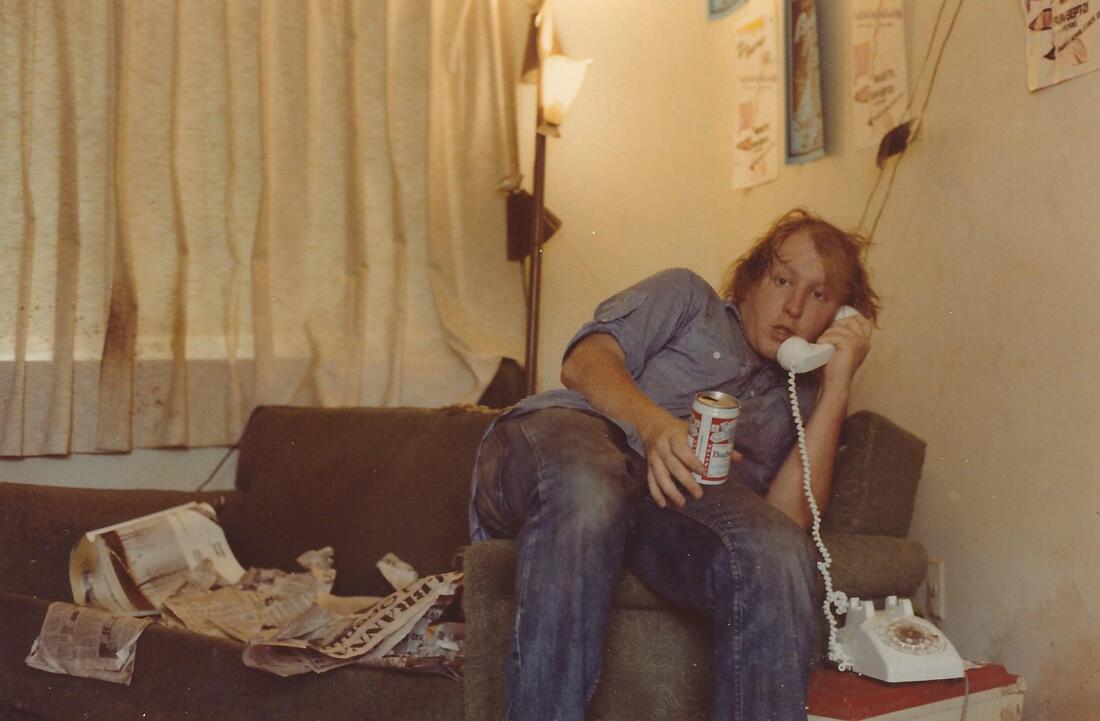 Fixing to head out for a night on the town.... Here’s something that happened in this apartment: the place was infested with roaches, as were all the places I lived in then. So sometimes we’d get loaded and hunt the roaches with a BB pistol—shake the furniture, watch them away scurry up the wall--bap, bap, bap. Rugay jumping with excitement, amusing late night fun. (One night, after the bar closed, a neighbor, Jerry the Postman, came over and watched the hunt. Jerry later owned a bookstore in Dallas, where he knew writer Chuck Taylor, who heard the hunt story from him and appropriated it, turning it from a energetic youthful fun story to boring tragic middle-aged story. This is apparently how literature works). Another night I stupidly left my keys down at the Deep Eddy and was locked out. Rugay was locked in! I had to get to the poor little guy, so I bang shouldered the door open, busting it. The next morning I just nailed the door shut and went in and out through the back door. (The landlord didn’t appreciate my carpentry skills). Eventually I moved out—off to Connecticut for a house-sitting gig. Year and years later, when I was driving the cab, I got a call to pick up a guy at this address. When the customer came out and got in the car, I asked, “Is that place still haunted?” The guy was shocked. “Hey—how’d you know about that?” When I explained, he told me that—Yeah, it was still haunted—balls of light, shadowy figures—and that he’d hired a psychic to come and do a reading. It turned out that the ghost was that of an old woman who’d died of the flu in the late 1950s. So there. But—I worry. A few years back the building was renovated—really, really renovated. It’s pretty nice now.
My worry—what happened to the ghost? I hope she’s still there. Haunted House pros: Ghost! Cheap (then), opportunities for amusing late-night recreation Haunted House cons: busted front door, rickety plumbing (these have probably been fixed) Verdict: If you can afford it, move in now!  You might be interested in my novel of Austin, That Demon Life....a novel of lust and laziness....
“That Demon Life has got Austin in its sway, or at least this novel's motley crew of characters. A horny judge, a defense attorney with an attitude, an entourage of petty criminals, a dating service maven, a self made internet porn star and a boy toy or two—they're all slouching toward Sixth Street and beyond. This is a fast-paced, hold-on-to-your-bar stool satire, a hilarious, stumbling romp through law and disorder, urban ennui and its after-hour antidotes, Texas-sized lust and doom.” —Alison Moore, author of The Middle of Elsewhere and Synonym for Love. Read That Demon Life now! |
Lowell Mick White
Author of the novels Normal School and Burnt House and Professed and That Demon Life and the story collections Long Time Ago Good and The Messes We Make of Our Lives. Categories
All
Archives
July 2023
|


 RSS Feed